
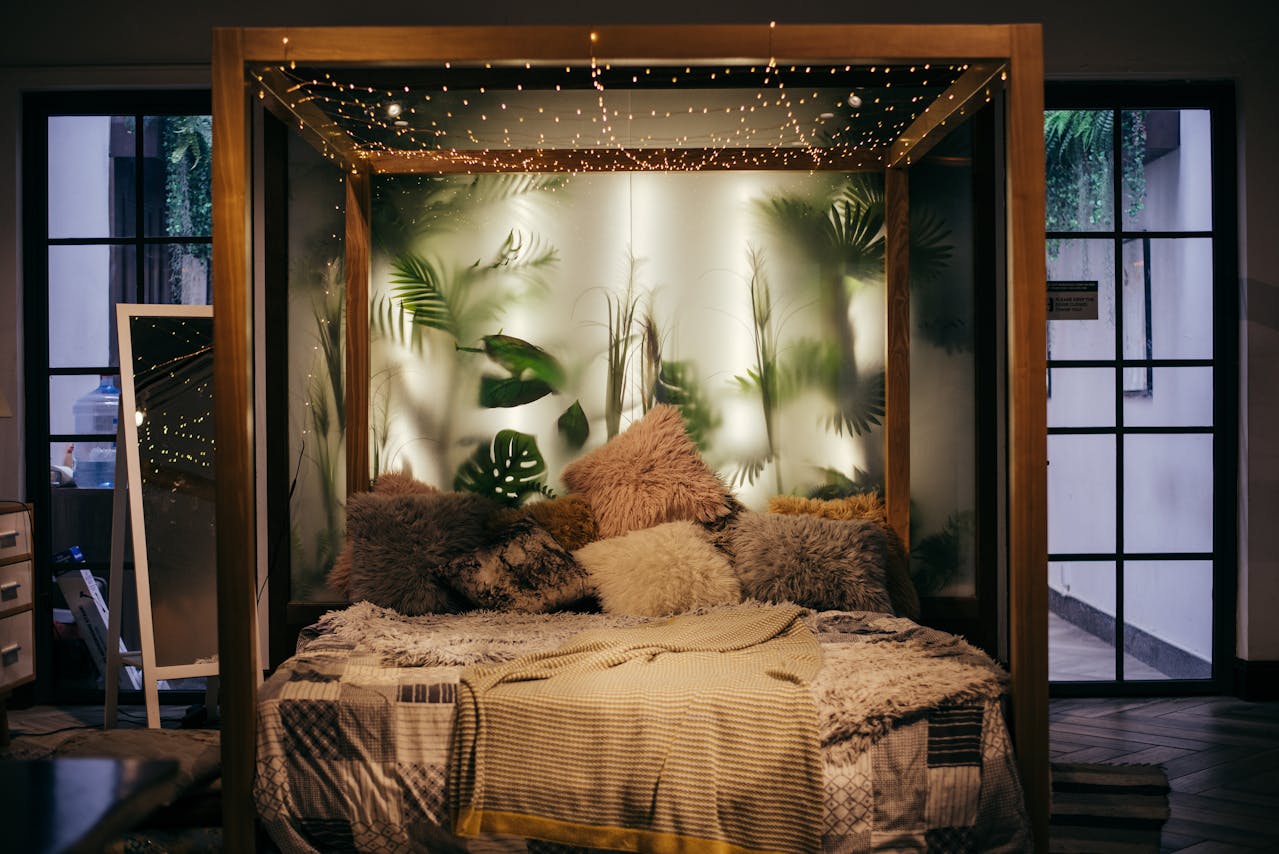
Creating a relaxing bedroom isn’t only about aesthetics; it’s a necessity for good health and well-being. The NHS recommends that adults get between seven and nine hours of sleep per night – and your sleep environment can be a key factor in achieving that goal. In a world where stress and fast-paced lifestyles are common, your bedroom should be a sanctuary where you can unwind and rejuvenate.
Below, we explore five important aspects of interior design that can help you create just that.
1. Colour scheme
The colour of your bedroom walls can greatly influence your mood and sleepiness. Lighter, cooler colours are often recommended as they promote relaxation and calmness. Soft hues like blues, greens, and greys are ideal for creating a tranquil atmosphere.
If you’re unable to change the wall colour – for example, if you’re in rented accommodation – consider accenting the room with bedding, rugs, or wall art in calming shades.
2. Bedding
Investing in comfortable bedding is crucial for a good night’s slumber. During warmer months you may prefer a cotton or linen quilt as breathable fabrics are key for comfort. For some, more layers allow flexibility in managing temperature overnight.
Essentially you should choose bedding materials that suit your comfort preferences and the season, as well as your aesthetic tastes.
3. Lighting
The lighting in your bedroom impacts your circadian rhythms and, consequently, your sleep quality.
Exposure to natural light during the day is beneficial, but artificial light in the evening can be disruptive. Choosing dimmable lights or bedside lamps with warm tones to help prepare your body for sleep.
Blackout curtains can be a great addition to block out external light pollution and help create a darker, more conducive environment for sleep.
4. Decluttering
A clutter-free space is a more relaxing one, further contributing to better kip.
Having practical storage is key. If you’re limited on space, make full use of awkward dimensions with fitted furniture, install shelves to maximise verticality, and take advantage of extra opportunities like windowsills and backs of doors.
Regularly organising and clearing out unnecessary items can make a significant difference too. A tidy space is a peaceful space!
5. Personal touches
Personalizing your bedroom with items that have sentimental value, such as photos, art or cherished objects, can also enhance the feeling of relaxation. These items should evoke positive emotions and memories, making your bedroom feel like a personal haven.
Greenery is another great option – not least because many plants help improve air quality. Choose a funky pot to make your plant babies stylish too!
In summary, a relaxing bedroom environment isn’t just about decoration; it’s about creating a space that supports your mental and physical health. By considering the aspects we’ve discussed above, you can transform your bedroom into a serene escape from the hustle and bustle of daily life.