We landed in Sydney expecting space – that’s the myth most people carry into Australia: wide roads, quiet suburbs, time to breathe, room everywhere. What we found instead was motion. Constant, layered, purposeful motion.
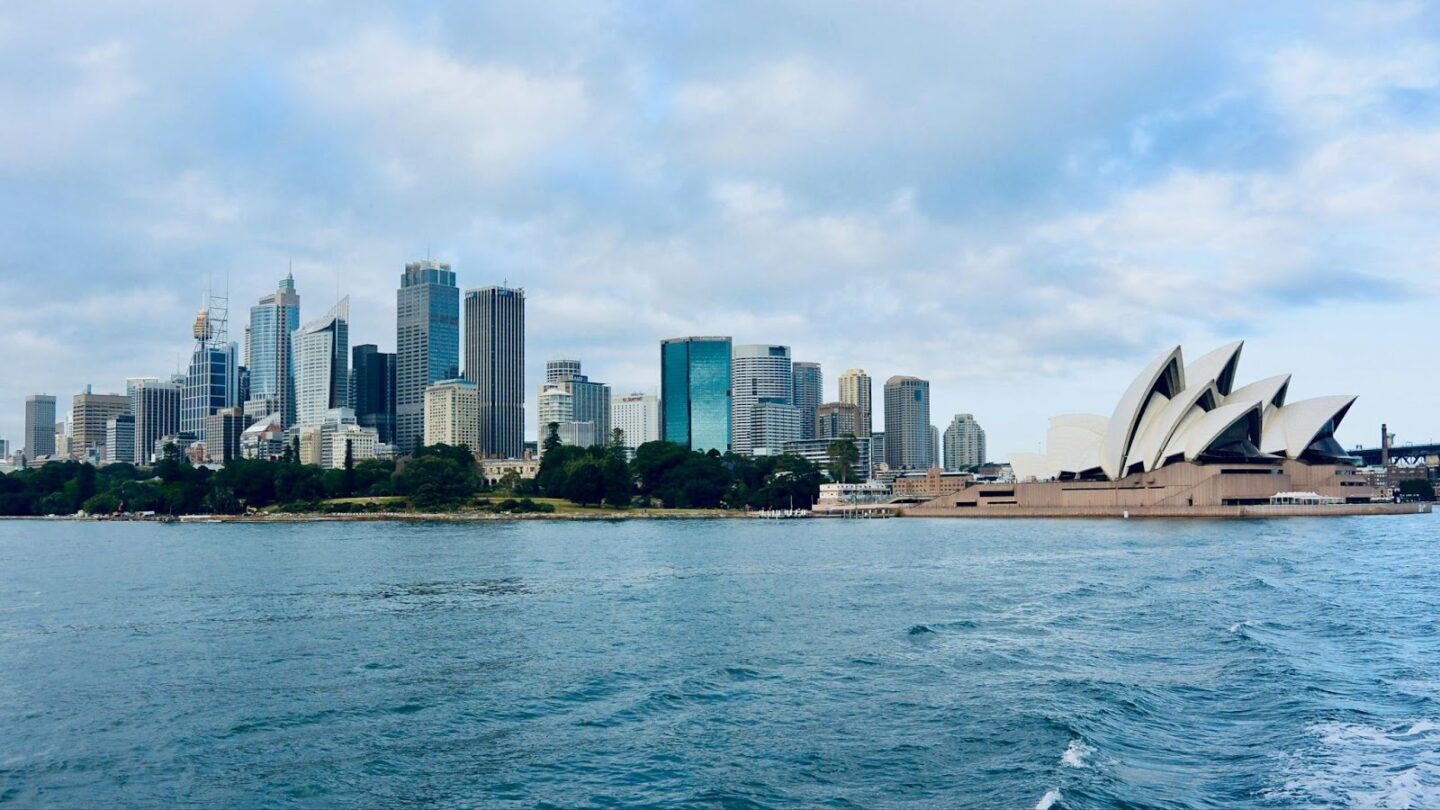
Photo by Paul Buijs: https://www.pexels.com/photo/city-skyline-across-the-ocean-11544590/
Sydney didn’t unfold slowly. It arrived all at once—crowded footpaths, packed cafés, trains full of school kids, bikes flying past prams, and families moving through their days with practiced efficiency.
Australia, at least this version of it, wasn’t laid back in the way we’d imagined. It was organised, energetic, and very much alive.
And none of that was a bad thing.
Sydney as the Destination, Not the Exception
Sydney isn’t just Australia’s postcard city; it’s its engine. Families here don’t live on the edges looking inward—they live inside the city, woven into it. School runs happen on foot, by train, by bike. Parents juggle work calls between playground stops. Children grow up navigating public space confidently, because public space is where life happens.
From early morning, the city is already awake. Cafés are full before nine. Playgrounds are busy by mid-morning. By afternoon, streets near schools feel like controlled chaos—kids spilling out, parents coordinating pickups, conversations overlapping in multiple languages. It’s loud, but it’s functional. Busy, but not messy.
Sydney breaks the myth that Australian cities are sleepy or slow. This is a place that runs on momentum.
Busting the Backyard Myth
One of the biggest misconceptions about Australia is that family life revolves around large houses with even larger backyards. That image exists—but mostly on the fringes. In Sydney itself, family life looks very different.
Many families simply don’t have backyards. And they’re not waiting for them.
Instead, they’ve adapted. Parks replace lawns. Balconies replace patios. Shared courtyards replace private gardens. The city becomes the extension of the home, not something separate from it.
What surprised us most was how normal this felt. Children didn’t seem deprived of space; they seemed fluent in it. They knew where to go, how to move, how to exist comfortably among others. The absence of a backyard didn’t mean less childhood—it meant a different one.
Flats, Apartments, and Vertical Family Life
Sydney is a city of flats. Not as a trend, but as a reality.
Apartment living here isn’t just for singles or students. Families live in flats across inner and middle suburbs, often by choice. Proximity matters. Being near schools, transport, work, and services matters more than square metres.
Duplexes: The Middle Ground That Actually Works
One housing type stood out repeatedly: the duplex.
Duplexes are everywhere once you start noticing them—two homes sharing a wall, often two storeys high, usually tucked into established residential streets. They’re not flashy, but they’re incredibly practical. For families, duplexes offer a rare balance: more space than an apartment, less isolation than a detached house, and a location that keeps daily life manageable.
In many Sydney neighbourhoods, older single homes have been replaced with duplexes, allowing families to stay close to the city without pushing further out. Upstairs bedrooms, downstairs living spaces, small private yards, and just enough separation to feel independent. It’s urban family living without going fully vertical.
Duplexes quietly tell a story about how Sydney adapts. Rather than chasing endless sprawl, the city reshapes itself inward.
Apartments as Everyday Homes
Apartments in Sydney aren’t just places to sleep. They’re working homes. Families eat, work, rest, and raise children in them. Storage is used carefully. Space is intentional. Balconies matter more than you’d expect—not as decoration, but as breathing room.
We saw prams parked neatly in hallways, scooters leaned against walls, plants turning small balconies into green corners. Life wasn’t paused because space was limited. It was organised around it.
The Pace of Family Life
What makes Sydney feel loud and busy isn’t chaos—it’s density combined with purpose. Everyone seems to be going somewhere, but rarely in a rush that feels stressful. There’s a rhythm to it.
Mornings are brisk. Afternoons are social. Evenings soften. Families move through the day together, often in public. You see parents talking while kids climb. You hear laughter over traffic noise. The city doesn’t quiet down for families; families move confidently within it.
This energy is contagious. It makes you feel part of something larger, even as a visitor.
Schools, Schedules, and Structured Days
School life shapes the city. You feel it in the timing of crowds, the flow of transport, the way cafés fill after drop-off. Children in uniform are everywhere, moving independently earlier than many visitors expect.
Schools aren’t hidden behind gates far from daily life. They’re embedded in neighbourhoods. This keeps family routines tight and local. Less driving. More walking. More shared public space.
Education here feels integrated rather than isolated, and that integration shows in how children navigate the city with ease.
Why the Busyness Feels Positive
Busy doesn’t always mean overwhelming. In Sydney, it often means connected.
Families aren’t tucked away behind fences. They’re visible. They share space. They negotiate it daily. That creates a certain confidence—not just in children, but in parents too. There’s less pressure to make home everything, because the city provides so much of what families need.
Parks are designed to be used constantly. Paths exist because people actually walk them. Facilities aren’t ornamental; they’re functional. The city expects families to show up—and they do.
Australia, Reframed
Sydney forced us to rethink Australia entirely. This wasn’t the quiet, empty version we’d imagined. It was bigger, louder, faster—and more alive.
And that liveliness wasn’t exhausting. It was reassuring.
Families here aren’t struggling against the city. They’re working with it. Adapting housing, routines, and expectations to fit real life rather than idealised images. Backyards aren’t the measure of success. Connection is.
Australia, at least in Sydney, isn’t about space for the sake of space. It’s about movement, participation, and shared systems that keep life running smoothly—even when it’s busy as hell.
And by the time we left, that busyness no longer felt surprising. It felt like the point.